The Thigpen Waveguide Woofer -- Breaking Hoffmans Iron Law:
Hoffman’s iron law*** states that you can have any two speaker parameters below, but not all three at the same time:
1. Small box
2. Low Bass
3. High sensitivity.
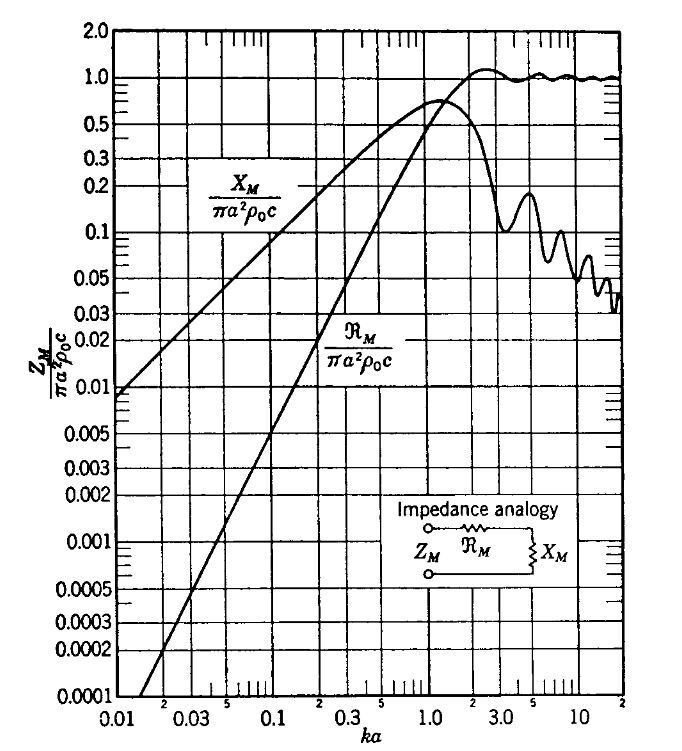
However, the key to the Thigpen woofer is to understand that Hoffman’s iron law only applies if ka<<1 and for the last 60 years that Thiele-Small parameters (which are excellent) have directed speaker designers to think in those terms.
(ka<<1 means that the cone area, or circumference of the speaker cone is much less the wavelength of sound being produced)
A significant Increase in cone area allows you to violate Hoffmans iron law while at the same time using an extremely small box volume.
You CAN actually increase the cone area enough to accomplish all three at the same time:
1 small box - reduce box volume
and at the same time:
2 low bass - extend bandwidth
3 high sensitivity - increase sensitivity
4. Plus smooth bass response in your room
The physics arises from textbooks written by Leo Berenak and Harry Olson (circa 1940) and their description of acoustic impedance.
However, THE REAL reason for the Thigpen woofer is to solve low frequency room mode problems.
Because room modes cause greater than +/-15dB swings in frequency response, we need a woofer with a different form factor to solve this problem in a traditional home audio listening environment.